
The Art of Exhaling
$45.00
October Feldenkrais Class: The Art of Exhaling
📅 Tuesdays @ 10 AM MT
🎧 Attend Live or by Replay
💻 Live on Zoom – Available Worldwide
Increase Vitality, Ease, and Calm
When I say, “Breathe,” what happens?
You take a breath, don’t you?
We nearly always put the accent on the inhale. But what happens when you shift your intention, awareness, and effort to the exhale?
Something remarkable happens. The inhale reorganizes itself spontaneously—and that change can influence far more than the breath that follows.
That is the organizing idea we’ll explore in this October Feldenkrais series through four profound lessons Dr. Moshe Feldenkrais taught in his Alexander Yanai series:
AY 17 — Breathing
AY 21 — Contracting the Abdomen While Exhaling
AY 435 — Alternately Stomach in the Breathing (Exhaling for Speaking)
AY 35 — Stomach and Chest First (See-Saw Breathing)
These aren’t conventional breathing exercises. You won’t be trying to breathe more deeply or impose an ideal rhythm. Instead, we’ll change the organization of breathing itself—and discover what happens when the inhale no longer has to be the main event.
What You Will Experience
Slower Heart Rate and Deep Physical Calm: Calm Begins with the Exhale
A complete exhalation shifts your nervous system toward parasympathetic regulation. Your heart rate slows, blood pressure settles, and unnecessary tension through your jaw, neck, chest, and abdomen begins to dissolve. Instead of trying to relax, you’ll learn how to organize your breathing so relaxation follows.
Better Oxygen Delivery and Mental Clarity: More Air Isn’t More Oxygen
Taking bigger breaths doesn’t guarantee better oxygen delivery. A complete exhale allows CO₂ to rise naturally, helping blood vessels dilate and hemoglobin release more oxygen to your brain and tissues. Better oxygenation begins not by taking more in, but by breathing out more fully.
Freedom from Air Hunger and Gasping: The Pause Is Part of the Breath
Rushing to inhale can reinforce the very sensation of needing more air. Gentle swallowing and resting at the end of the exhale retrain your nervous system to become comfortable in that quiet interval. When you no longer have to chase the next breath, the next breath comes to you.
A Softer Belly and Freer Diaphragm: Exhaling Is an Action
Contracting the abdomen during exhalation helps empty the lungs and allows the diaphragm to rise more completely. The result is greater freedom through your belly, ribs, spine, throat, and voice. Sometimes the path to a freer inhale is learning to exhale with greater intention.
Spontaneous, Effortless Breathing: Stop Managing the Inhale
When you stop organizing every breath around taking air in, your automatic breathing mechanisms have greater freedom to respond to what your body actually needs. The inhale becomes spontaneous, appropriately sized, and remarkably effortless. You don’t need to learn how to take a better breath. You need to create the conditions that allow a better breath to happen.
Who This Series Is For
This series is for anyone who wants to improve the quality of their breathing—and experience what changes when breathing becomes easier.
If you carry tension through your neck, jaw, shoulders, chest, or abdomen; become winded while walking or talking; hold your breath when concentrating; struggle to settle at night; or simply want greater vitality, calm, and physical ease, these lessons will give you an entirely different way to work with your breath.
You won’t learn a breathing technique to practice or another “correct” way to breathe.
You’ll learn something far more useful: how shifting your intention, awareness, and effort toward the exhale can reorganize the inhale—and, with it, the organization of your whole self.
Join me this October for The Art of Exhaling and discover how much can change when you put the accent on the exhale.
What My Students Say
“Al’s lessons are wonderfully uplifting. I walk taller, with more awareness and grace.“
— Laura N.
“This class transforms you from the inside out. I’m amazed by how much progress I’ve made.“
— Jessica M.
“I didn’t know I’d get a transformation. I was just looking for relief!”
— Lea Murray
Why Choose Feldenkrais Lessons?
Rather than teaching static postures, Feldenkrais lessons help your nervous system learn more efficient, coordinated movement through gentle explorations—on the floor, in supported positions, and always at your own pace.
These lessons are open to anyone who wants to discover new possibilities and explore new ways of moving.
Register Now
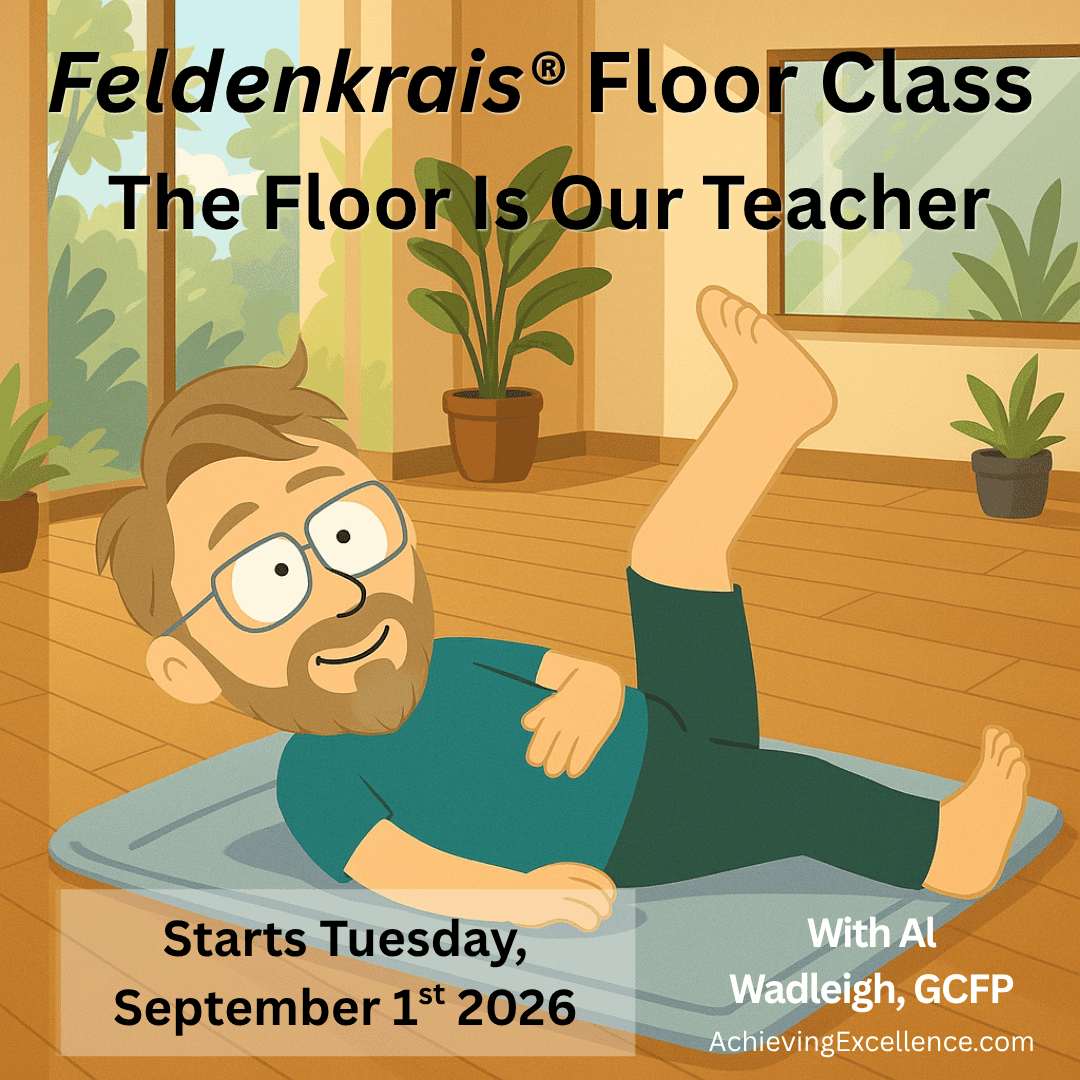
Reserve your place today and spend September exploring how the floor is your teacher.
Join us live each Tuesday or learn at your own pace with the class recordings.

11 reviews for The Art of Exhaling
Customer reviews
No reviews found